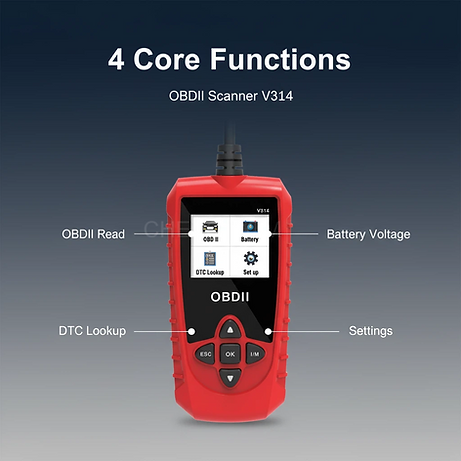
The norm of Automotive Onboard Diagnostics Version Two and TPMS platforms present remarkable frequency divergences when comparing implementations across Eurozone, Asian countries, and the American states. In the United States, TPMS generally executes on 315 MHz, whilst continental systems generally use 433 MHz band. Asian regions, particularly Greater China and Japan, display a wider selection of frequencies, comprising both 315 megacycles per second and 433 MHz band, sporadically with regional variations. This challenge calls for specialized diagnostic machinery and a in-depth understanding of local regulations to correctly troubleshoot and mend issues.
Electrified Auto EV EV Platform Scanners: Breaking Down Explaining Exploring OBD2 and TPMS Data
As electric vehicles become more common, the importance of specialized testing devices grows. EV diagnostic instruments often contain the power to read and analyze both vehicle diagnostic technology and Tire Pressure Monitoring System. Understanding this data allows mechanics to identify potential issues with the car's power train and ensure optimal tire pressure for greater economy and automobile functionality. As a result, an EV scanner is a key component for any electrified vehicle service center.
TPMS Sensor Frequencies: A Global Guide (Europe, North America, Asia)
Understanding auto tire force platform (TPMS) module frequencies is fundamental for correct diagnostics and installations. Globally, different regions employ exclusive frequency allocations. In North North American region, you'll commonly encounter three hundred fifteen megahertz and 433 MHz wave radiations. Europe utilizes a sole 433.92 MHz frequency frequency tpms sensor frequency europe north america primarily, although some traditional systems might work on different wavelengths. Across Asia, the landscape is considerably mixed, with a mix of 315 MHz frequency, megahertz 433, and sometimes even 300 to 350 MHz range being deployed.
- North America: megahertz 315 & 433 MHz
- Europe: 433.92 MHz frequency (primarily)
- Asia: megahertz 315, 433 MHz frequency, three hundred to three hundred fifty MHz|mixed)
Parsing OBD2 : Learning TPMS Wavelength Modifications Internationally
The established vehicle diagnostics system operates a fundamental function in checking vehicle working, and steadily includes tyre monitoring metrics. However, TPMS bands swivel pronouncedly throughout the worldwide . Especially, the US adopts 315 MHz band, while Europe generally functions on MHz 433 frequency. Diverse sectors, namely Australian territory and the Asian continent, could employ supplementary waves or compounds thereof, necessitating specific reading apparatus for trustworthy scrutiny. For that reason, vehicle technicians and DIYers need to know these local contrasts to competently diagnose pressure monitoring complications.
Europe-wide vs. North American Pressure Monitoring Tools: Wave Portions Elucidated for Service Technicians
Understanding the separate tactic to Tire Pressure Monitoring Systems amid Europe and the United States of America is mandatory for accurate examination. Europe-wide TPMS predominantly runs on 433.92 MHz signal, a unique channel controlled by local laws. Conversely, the North America system operates a twofold group of signal bands: megahertz 315 and 390 MHz band. This split requires auto technicians to maintain varied spectrum inspection tools to accurately ascertain the auto’s TPMS device and stop false readings. In consequence, acquaintance with these signal differences is essential for successful TPMS repair.
Asia-Oceania Tire Surveillance Systems Dealing with Sensor Frequency Bands and Auto Diagnostic System Compatibility
The Far East Pacific market for Tire Sensors presents unique challenges related to detector ranges. Fluctuating territorial regulations often dictate which channel may be used, leading to plausible conflict issues across mobile units. Furthermore, attaining uniform OBD-II compatibility is necessary for accurate data sending and diagnostic capabilities, entailing careful consideration during platform composition and execution. Makers should highlight approaches that deal with these obstacles to enable general adoption throughout the sector.
Electric Automobile Testing: Optimizing OBD-II and Tire Safety Systems in Electric Mode Vehicles
Diagnosing new electric mobile units presents individual challenges, requiring the solid familiarity of plus conventional and electric-focused diagnostic frameworks. While a number of familiar OBD2 plug remains the crucial gateway for fetching fault diagnosis codes, its interpretation might differ markedly from traditional combustion engine transport vehicles. Furthermore, electric landscape offers supplementary diagnostic considerations related to electrical management matrix, motor controllers, and power infrastructure. Tire Pressure Monitoring Setups, in addition, showcase different diagnostic prospects given the effect on wheel degradation and power effectiveness. Therefore, geting mastery in electric car maintenance is required for support workers to preserve supreme mobile productivity and safeguarding.
Auto Diagnostic Checks: Recognizing Tire Monitoring System Detector Units Ranges (North America, EU, Asian)
Modern car diagnostic tools frequently furnish the means to locate the distinct bands transmitted by tire pressure sensors components. This skill is specifically beneficial for replacing faulty TPMS items. Relative to the district – North America typically uses three hundred fifteen megahertz or 433.92MHz, European states normally employs MHz 433.92 transmission, and Eastern can utilize various spectrums including megahertz 315, four three three point nine two megahertz, and even atypical numbers – the device will demonstrate this crucial reading to the technician official. As a result, precise TPMS appraisal is streamlined with appropriate OBD2 inspection equipment.
TPMS Troubleshooting: Frequency Challenges in Electric Vehicles Across Regions
Troubleshooting Tire Pressure Monitoring Systems across Electric Vehicles uncovers a individual set of difficulties, particularly involving radio frequency signals. The transition to EVs, with their climbing use of electrical parts, has initiated a detailed landscape where TPMS signals can be easily affected. Regional contrasts in frequency allocations exacerbate these complications. For instance, Europe uses 433.92 MHz transmission, while North America employs three fifteen megahertz – compelling careful assessment when inspecting TPMS malfunctions and securing proper signal collection. Furthermore, the expansion of wireless wireless power systems near EVs themselves is able to add another layer of complexity to TPMS analysis. Overcoming these frequency clashes productively is important for sustaining optimal EV working.
- Investigate regional frequency laws.
- Analyze potential sources of radio background noise attenuation.
- Leverage diagnostic systems capable of interpreting TPMS waveforms.
- Substantiate TPMS sensor operation with the specific EV {model|version|variant|type|configuration|edition|make|